
Size is not all that matters. But still, we would love to know how big Butte in Montana is. Here is the answer:
Butte, Montana covers an area of 1855.32 square kilometers (716.34 square miles).
With 33,892 people living in Butte that comes to a population density of 18.27 inhabitants per square kilometer (47.31 / sq mi)
As a reference: The 8,398,748 people living in New York City are crammed onto 1214 sq km (468.73 sq mi), which results into a population density of 6918 inhabitants per square kilometer (17918 / sq mi).
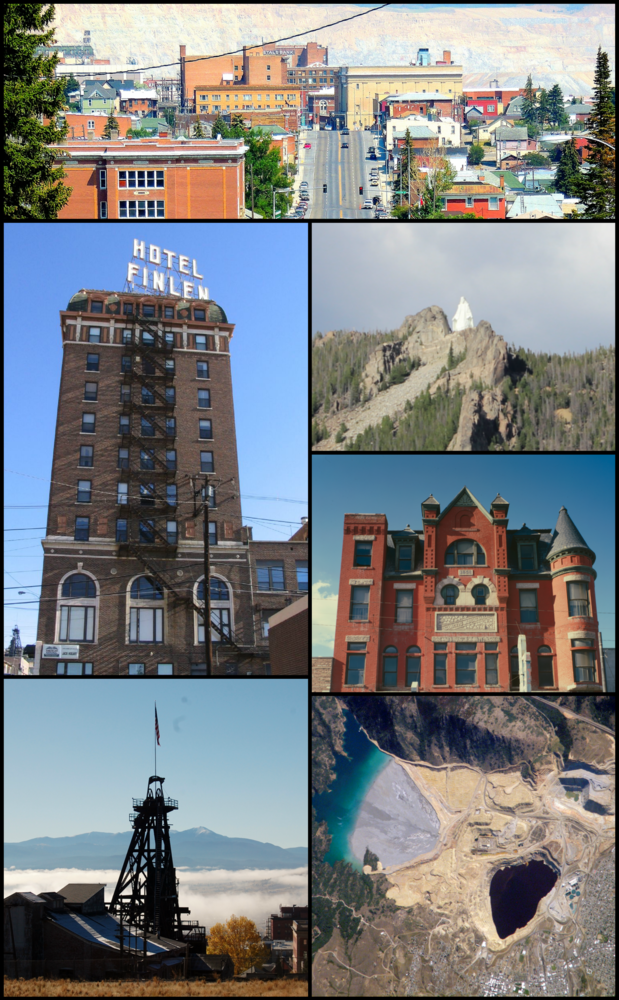
Butte is the county seat of Silver Bow County, Montana, United States. In 1977, the city and county governments consolidated to form the sole entity of Butte-Silver Bow. The city covers 718 square miles (1,860 km2), and, according to the 2010 census, has a population of 33,503, making it Montana’s fifth largest city. It is served by Bert Mooney Airport with airport code BTM.Established in 1864 as a mining camp in the northern Rocky Mountains on the Continental Divide, Butte experienced rapid development in the late-nineteenth century, and was Montana’s first major industrial city. In its heyday between the late-nineteenth and early-twentieth centuries, it was one of the largest copper boomtowns in the American West. Employment opportunities in the mines attracted surges of Asian and European immigrants, particularly the Irish; as of 2017, Butte has the largest population of Irish Americans per capita of any city in the United States.Butte was also the site of various historical events involving its mining industry and active labor unions and Socialist politics, the most famous of which was the labor riot of 1914. Despite the dominance of the Anaconda Copper Mining Company, Butte was never a company town. Other major events in the city’s history include the 1917 Speculator Mine disaster, the largest hard rock mining disaster in world history.Over the course of its history, Butte’s mining and smelting operations generated in excess of $48 billion worth of ore, but also resulted in numerous environmental implications for the city: The upper Clark Fork River, with headwaters at Butte, is the largest Superfund site in the United States, and the city is also home to the Berkeley Pit. In the late-twentieth century, cleanup efforts from the EPA were instated, and the Butte Citizens Technical Environmental Committee was established in 1984. In the 21st century, efforts at interpreting and preserving Butte’s heritage are addressing both the town’s historical significance and the continuing importance of mining to its economy and culture. The city’s Uptown Historic District, on the National Register of Historic Places, is one of the largest National Historic Landmark Districts in the United States, containing nearly 6,000 contributing properties. The city is also home to Montana Tech, a public engineering and technical university.
Cities with a similar size as Butte
If you want to check which cities have a similar size as Butte, Montana, here you go:
- Houston, Texas with a size of 1,724.54 square kilometers (1,724.54 sq mi), population: 2,195,914
- Oklahoma City, Oklahoma with a size of 1,607.56 square kilometers (1,607.56 sq mi), population: 591,967
- Jacksonville, Florida with a size of 2,265.30 square kilometers (2,265.30 sq mi), population: 880,619
Cities with a similar population size as Butte
Here a list of cities that have a similar number of inhabitants like Butte, Montana:
- Douglasville, Georgia with a population of 30,961 people
- Fairborn, Ohio with a population of 32,352 people
- Jackson, Michigan with a population of 33,534 people
- St. Cloud, Florida with a population of 35,183 people
- Greenfield, Wisconsin with a population of 36,720 people
- Richfield, Minnesota with a population of 35,228 people
- Rohnert Park, California with a population of 40,971 people
- Oakley, California with a population of 35,432 people
- Norwich, Connecticut with a population of 40,493 people
- Bentonville, Arkansas with a population of 40,167 people